PCI at 20: Crossbow at EUCM Edinburgh, and the Crossroads Luncheon We Hosted
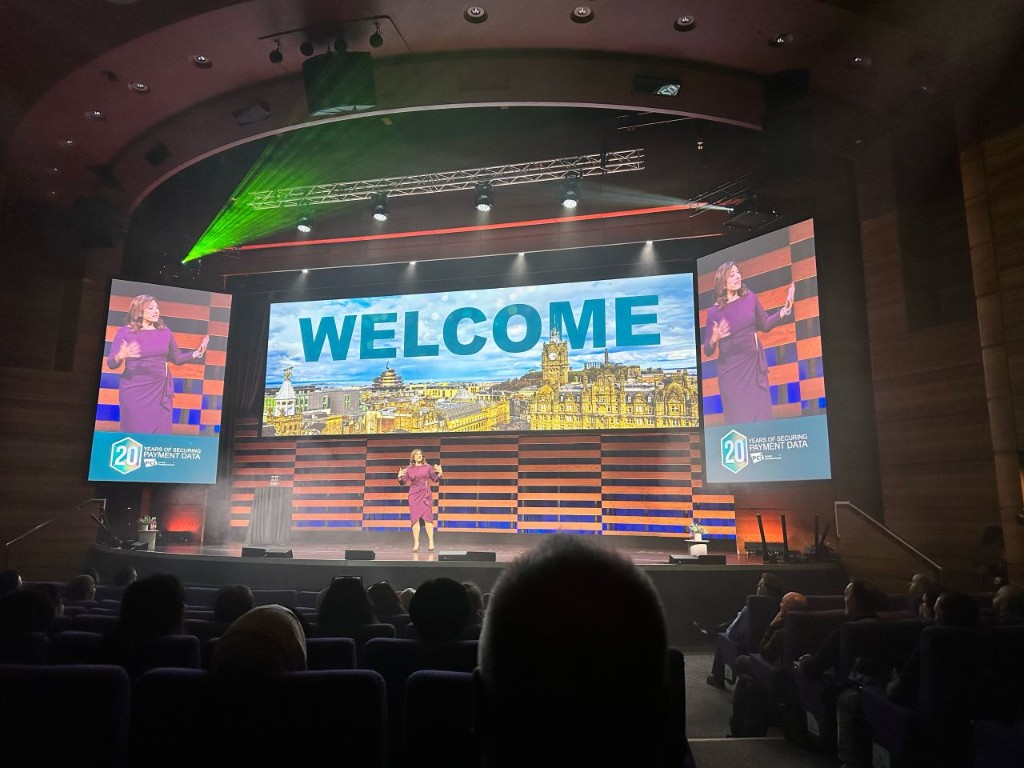
Edinburgh marked 20 years of PCI DSS. The more useful conversation was about the next twenty: who is accountable when an AI system can act inside a payment environment, and which of today's controls still hold once it does. Crossbow spent 20–22 October at the PCI Security Standards Council's Europe Community Meeting, and hosted Crossroads alongside it with Tribal.
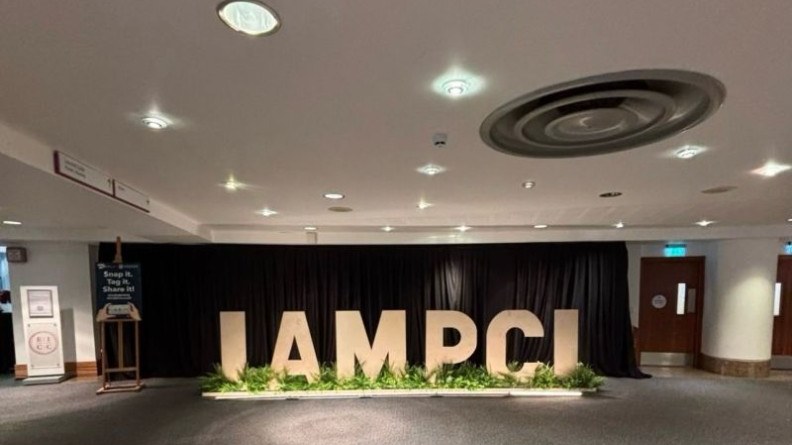
A milestone, and a harder question
The Europe Community Meeting returned to the Edinburgh International Conference Centre a decade after the city last hosted it. The Council set the week against a specific tension. AI is changing both the attacks on payment data and the tools organisations use to defend it. Trust, in that setting, is no longer a policy statement. It is a question of access, oversight and evidence.
The programme held both halves of that history. Twenty years of the standard, the Council's current work, AI in compliance, emerging threats, and the practical distance between a control that passes an assessment and a control that survives contact with a live environment. Merchants, processors, acquirers, brands, assessors and technology firms were in the same rooms. One published account of the week put attendance at 637.

Three conclusions from the week
The public record coming out of Edinburgh is consistent on three points. They are the ones we would take into a board discussion.
AI is already inside the standard. PCI DSS v4.0.1 does not create a separate rulebook for models. If a system stores, processes or transmits cardholder data, or can affect the security of that environment, the requirements that exist today apply to it. The unresolved issue is agency. An agent that can take an action without a person at each step still needs an owner, a boundary on what it can reach, and a record of what it did. The Council's guidance is unambiguous on assessments: AI may shorten the work, and the judgement remains with the qualified assessor. Until a future version of PCI DSS says more, Security Considerations for AI Systems is the supplement organisations are expected to use.
The third party is now part of the control. Requirements 12.8 and 12.9 kept returning, from both sides of the contract. What a service provider owes, and what an organisation owes when it consumes one. An AI feature on a payment page, or cardholder data sent to an external model, is a scoping decision and a vendor decision before it is a product decision. Access control, logging and vendor management already cover that ground. The failure assessors described in Edinburgh is narrower: vendors that cannot say, precisely, where the data goes and who else can see it.
The next PCI DSS is being drawn. v4.0.1 is still the one that binds. Reporting from the meeting says the Council indicated two likely moves in a future release. Payment tokens would come into scope alongside the PAN, because a token that can initiate a payment can be abused in much the same way as a card number. Parts of PCI 3DS Core and the TSP requirements would fold into PCI DSS, so an entity assessed against several standards is not asked to produce the same evidence twice. Quantum was treated as a planning risk, not a new control set. Ciphertext captured now is exposed once decryption becomes practical, and v4.0.1 already requires an annual review of the cipher suites in use. None of that changes the assessment in front of an organisation this year.
Taken together, the week described a standard moving from a point-in-time examination toward assurance that has to survive systems which change between audits.
Crossroads, with Tribal
Crossroads was our session with Tribal, held for executives who have to operate inside that shift. The title was Securing the AI-Powered Payments Ecosystem. The subject was narrower than the title suggests: what breaks when the time from vulnerability to exploit collapses, and when the same data must satisfy PCI DSS v4.0.1, GDPR and the EU AI Act without stopping the engineering work underneath.
We set the room for a working lunch, not a keynote. Tables, a short run of slides, and then the screen off, so the people who own the risk could compare how they actually run it.

The opening line was the one the community meeting had been circling all week. Compliance is point-in-time. AI operates in real time.
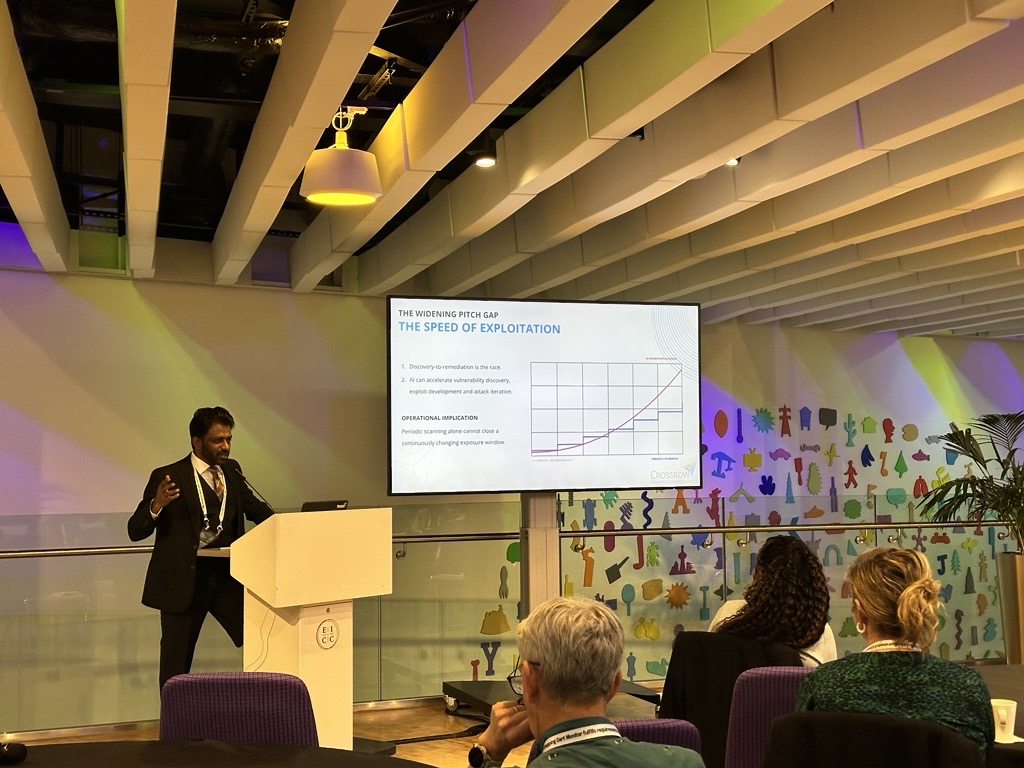
The patch gap. The Council has been plain that AI makes vulnerabilities easier to find and easier to turn into working exploits. A quarterly scan measures a window that no longer matches the speed of discovery. Visibility has to be continuous, or the control is already late.
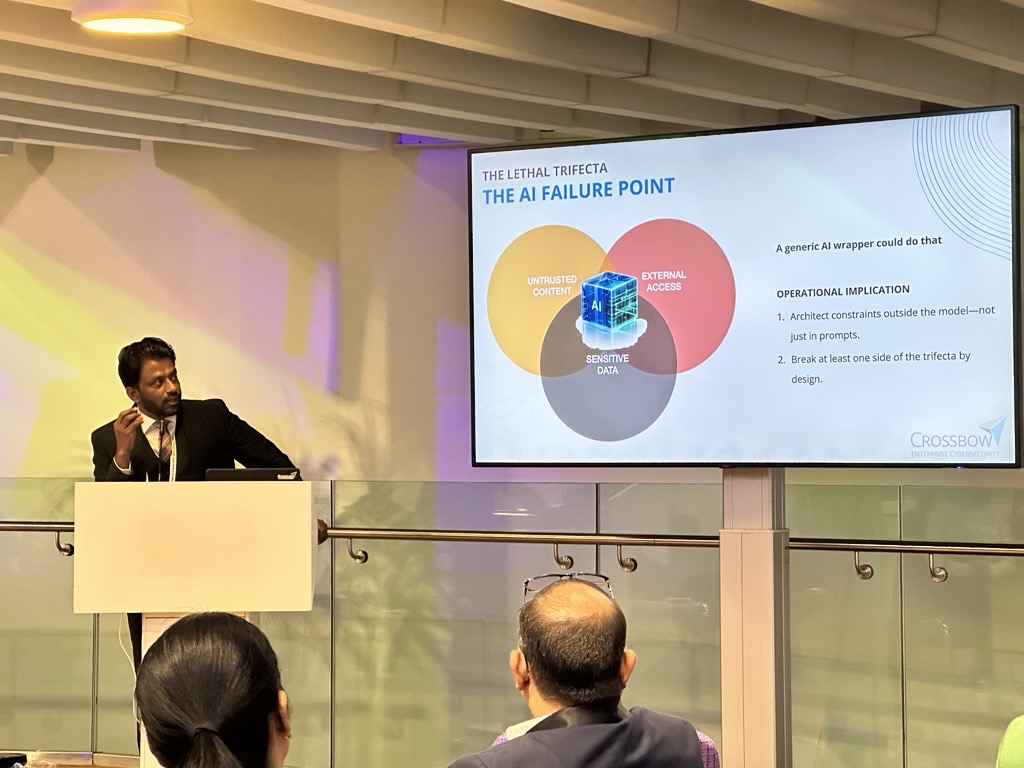
The lethal trifecta. Sensitive data, untrusted content and an external channel, available to the same component at the same time. A generic wrapper placed over existing systems often creates that intersection by accident. The design test is whether any one component can be prevented from holding all three.
Shadow AI. Models adopted outside any inventory. An AI bill of materials is the minimum record of what is in use. We asked the room a question that should have a dull answer and rarely does: who can name the models their engineers queried that morning?
We then drew a line we intend to keep. Continuous mapping and the plumbing of evidence can be automated. Segmentation of a difficult environment, a CREST test, and a finding a qualified person will sign cannot. That second body of work is Crossbow's. Tribal is the system the evidence lives in.
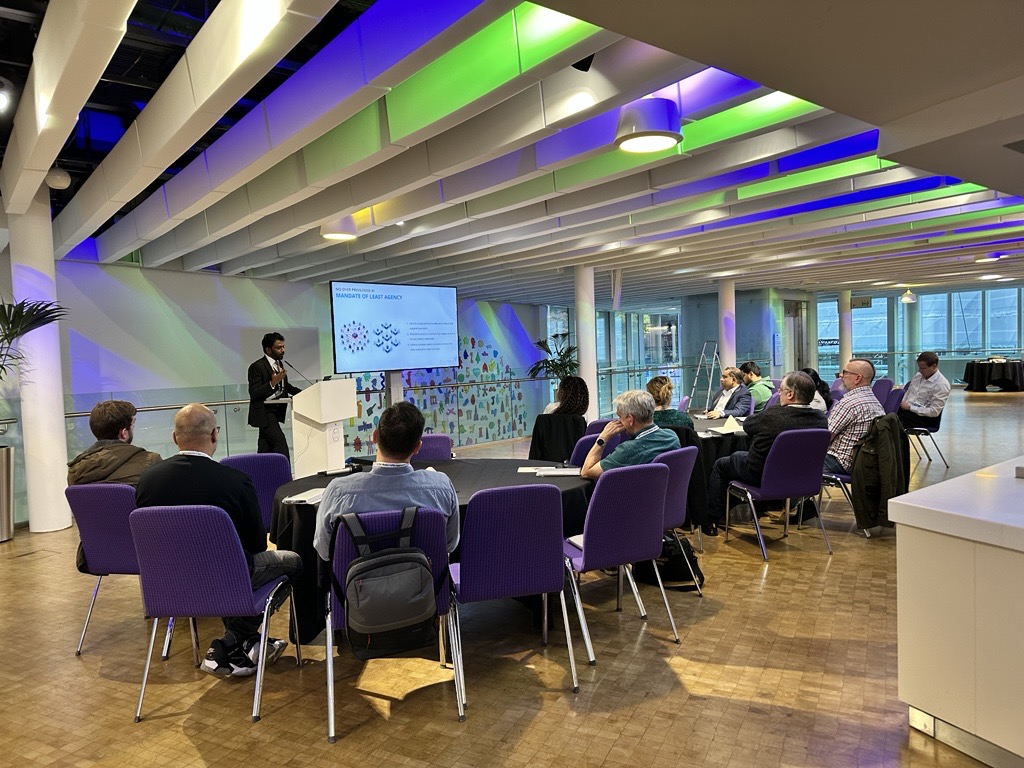
The operating model we showed
Tribal Core is the data layer: one store for evidence that otherwise stays trapped in separate tools. ADA, Asset and Data Analytics, reads that layer continuously. It footprints the organisation, identifies which obligations apply, and shows the state of IT controls between audits rather than at the moment an assessor arrives. On vulnerability management, NST and AST follow the separation the Council describes as least agency. Triage, development, testing and deployment stay apart, so no single agent can find an issue, change the system and release the change. AINA reads the same data inside those guardrails. It does not receive the open path to sensitive data, untrusted content and an external channel that produces the trifecta.
Tribal finds the gap and keeps the workflow moving. It does not replace the assessor. Where the work needs a CREST engagement, a PCI validation, or a named professional behind the finding, Crossbow does that work against the same evidence base.

For the middle of the hour the slides stayed down. Risk managers and security engineers, including from Worldline, Shell, Capital One and Lloyds Banking Group, described the same constraint in different businesses. Engineering needs to ship. Compliance needs a record. The tools in between do not share one. Lunch was reserved for taking those constraints one organisation at a time.
Edinburgh did not announce a new era so much as remove an excuse. Overlapping standards are being pulled together. Exploitation is getting faster. Accountability still has to have a name on it. The community meeting set that out for the industry. Crossroads was where we and Tribal showed the operating model we use with the teams who have to meet it.
Talk to an expert
Want this as a working programme?
This piece is a point of view. If you want to see how teams run it in practice, talk with us.